
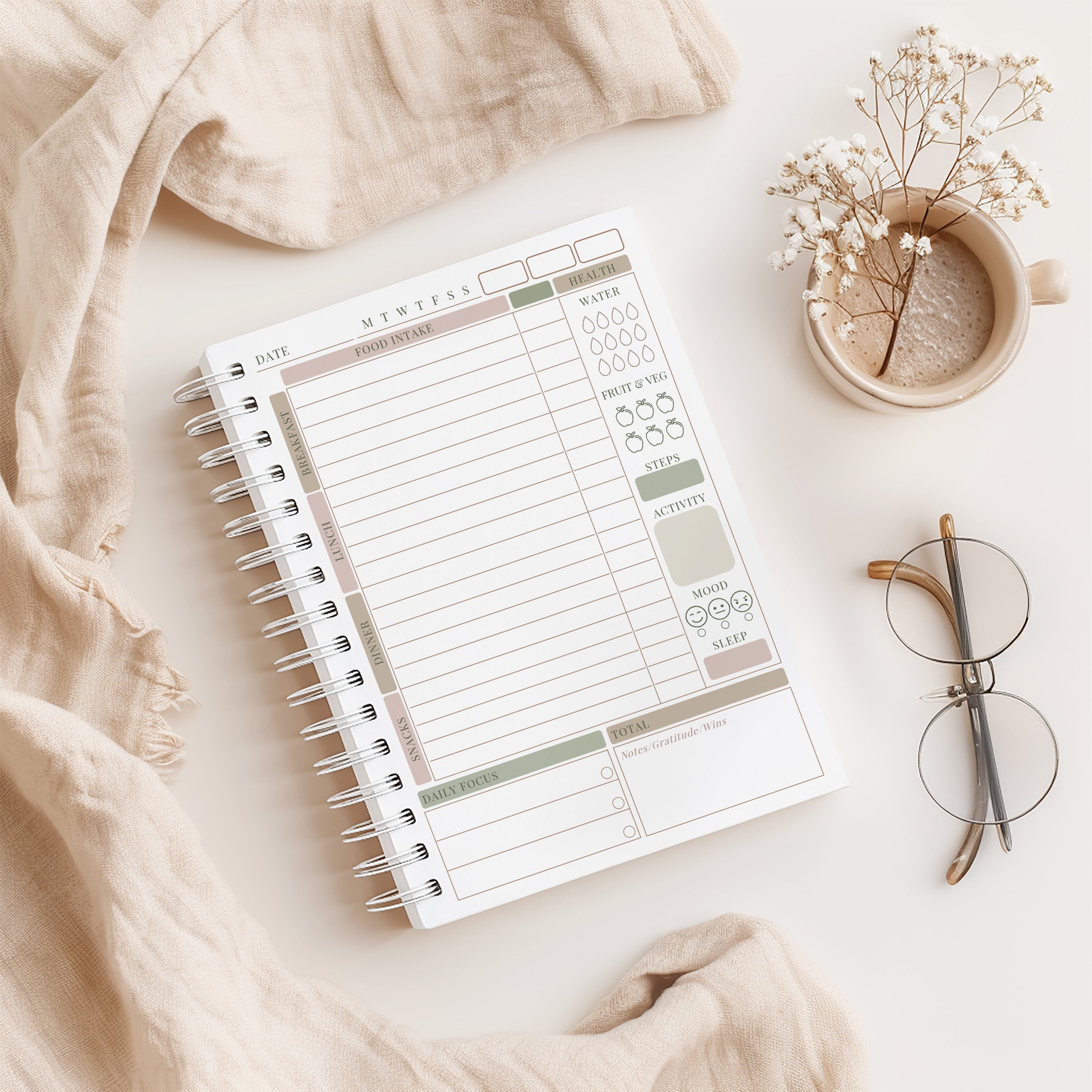
Daily food tracking is not about restriction or perfection. When done correctly, it's a self awareness tool that supports wellbeing, energy, health, and long term behaviour change.
This is about noticing patterns, not judging choices.
What Daily Food Tracking Actually Does
When you consistently record what you eat and drink, it helps you:
-
Create awareness of what, when, and why you eat
-
Identify patterns you would otherwise miss
-
Connect food choices to how you feel, not just what you consume
-
Make informed changes instead of reactive ones
Most people are surprised not by what they eat but by the patterns around it.
What Food Tracking Can Highlight
Daily tracking can reveal insights across several areas:
1. Eating Patterns
-
Skipped meals leading to overeating later
-
Long gaps between meals affecting energy or mood
-
Habitual snacking rather than hunger driven eating
2. Emotional & Situational Triggers
-
Stress, boredom, fatigue, or overwhelm driving food choices
-
Certain environments or times of day linked to specific habits
-
Emotional states connected to cravings or loss of appetite
3. Energy, Digestion & Wellbeing
-
Foods that support sustained energy vs energy crashes
-
Links between meals and bloating, discomfort, or fatigue
-
Hydration patterns and their impact on focus and mood
4. Consistency (Not Perfection)
-
Repeated behaviours over time matter more than individual days
-
Tracking highlights trends, not “good” or “bad” days
-
Progress becomes visible, even when results feel slow
Why Tracking As You Go Is Essential
How you track is just as important as what you track.
Track in the Moment (or as close as possible)
-
Memory is unreliable, especially with busy lives
-
Delayed tracking leads to forgotten details or guesswork
-
Real time tracking captures context and emotions
Keep It Simple and Honest
-
You don’t need perfect measurements unless thats your choice
-
Descriptions are often more useful than numbers
-
Consistency beats detail overload
Use Tracking as Observation, Not Control
-
The goal is awareness, not restriction
-
Write without judgement or correction
-
Think “data collection”, not “self assessment”
What to Include in Daily Food Tracking
A balanced approach works best but you can consider recording more detail such as
-
Food & drink (what you actually had)
-
Time of eating
-
Hunger level before and after
-
Mood or energy at the time
-
Notes (stress, sleep, social setting, cravings)
You are building a picture not following rules.
The Long Term Benefits
Over time, daily food tracking supports:
-
Better decision making without rigid plans
-
Increased trust in your body’s signals
-
Reduced emotional eating through awareness
-
Sustainable habits that fit real life
-
A healthier relationship with food
Tracking doesn’t tell you what to eat, it helps you understand yourself better.
Final Thought
Food tracking works best when it is:
-
Gentle
-
Consistent
-
Reflective
-
Judgement free
It is not about control, it is about clarity.
That clarity is where meaningful, lasting change begins.